The Natural Planning Model
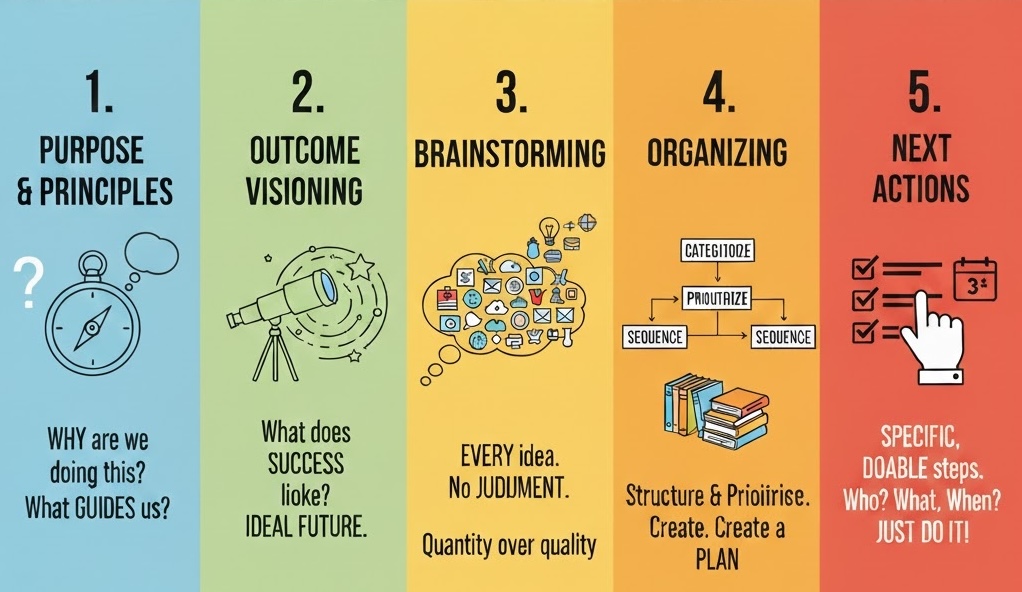
The Natural Planning Model: How Your Brain Actually Wants to Plan
Have you ever noticed how effortlessly you plan a dinner party or a weekend trip, yet struggle to organize a work project using formal planning methods? David Allen, productivity expert and creator of the Getting Things Done (GTD) methodology, identified this paradox and developed what he calls the Natural Planning Model—a framework that mirrors how our minds naturally and successfully plan things.
The Five Phases of Natural Planning
Allen's model breaks down into five sequential steps that reflect our brain's intuitive approach to accomplishing anything:
1. Purpose and Principles
Every successful plan begins with understanding why you're doing something and what values will guide your approach. This isn't just corporate jargon—it's the foundation that keeps you aligned when decisions get tough.
Key questions: Why are we doing this? What's the real intention? What standards or values must we honor?
2. Outcome Visioning
Once you know your purpose, you naturally imagine what success looks like. This is where you create a clear mental picture of the desired end result, engaging your senses and emotions to make it concrete.
Key questions: What will this look like when it's done? How will it feel? What specific results do we want to see?
3. Brainstorming
With your vision clear, your brain naturally starts generating ideas about how to make it happen. This is the creative, judgment-free phase where quantity matters more than quality.
Key questions: What are all the possible ways to achieve this? What needs to happen? Who should be involved?
4. Organizing
Now you take all those brainstormed ideas and structure them. You identify components, sequences, priorities, and relationships between different elements.
Key questions: What's most important? What needs to happen first? What are the key components or milestones?
5. Next Actions
Finally, you identify the very next physical, visible actions required to move things forward. This is where planning meets execution.
Key questions: What's the very next step? Who needs to do what? When should this happen?
Example 1: Planning a Family Vacation (Natural Way)
Let's watch the Natural Planning Model in action with something most of us do successfully:
Purpose: Create quality family time and help the kids experience a different culture while staying within our budget and respecting everyone's energy levels.
Outcome: We imagine ourselves exploring cobblestone streets in Spain, the kids trying new foods, everyone laughing at a beachside dinner, returning home with closer bonds and new perspectives.
Brainstorming: Barcelona or Valencia? Late spring or early fall? Airbnb or hotel? Kid-friendly museums, beaches, cooking class, flamenco show, day trips, bike tours, paella-making, playground stops...
Organizing: First decide dates (check school calendar), then destination, then book flights, then accommodation near key areas, then create a loose daily framework with one major activity and downtime built in.
Next Actions: Check Jack's soccer tournament schedule, ask Maria if she can watch the dog, search flights for May 15-25, create shared Pinterest board for Spain ideas.
Notice how natural this feels? You probably do this kind of planning all the time without even thinking about it.
Example 2: Launching a New Product Feature (Natural Way)
Now let's apply the same model to a work scenario:
Purpose: Reduce customer support tickets by 30% while improving user satisfaction and demonstrating our commitment to user experience, keeping within our Q2 development budget.
Outcome: Picture users discovering the new self-service help center, finding answers instantly, smiling as they solve their own problems. Support team celebrating fewer repetitive tickets. Customer satisfaction scores rising. Leadership presentation showing the positive impact.
Brainstorming: In-app help widget, video tutorials, searchable FAQ database, AI chatbot, community forum, interactive onboarding, tooltips, better documentation, user feedback loop, analytics dashboard, beta testing group, support team training, marketing announcement...
Organizing: Phase 1 (research and design), Phase 2 (build core FAQ and search), Phase 3 (integrate in-app), Phase 4 (launch and monitor). Dependencies: need user research before design, need content before development, need beta before full launch.
Next Actions: Schedule 30-minute meeting with Sarah from Support to identify top 20 support issues, email Dev team about technical feasibility of in-app widget, block 2 hours Friday to review competitor help centers.
How We Unnaturally Plan (And Why It Fails)
Here's where it gets interesting. In both our workplaces and personal lives, we often flip this natural sequence upside down, creating unnecessary stress and inferior results.
The Unnatural Workplace Approach
Starting with actions instead of purpose: "We need to create a PowerPoint deck for the stakeholder meeting" without ever discussing why we're meeting or what we're trying to achieve. Teams dive into task lists, Gantt charts, and deadlines before anyone has clarified the actual purpose.
Skipping the visioning: Meetings start with "What are the action items?" before anyone has painted a picture of success. Without a shared vision, team members work toward different mental images of the outcome, creating conflict and misalignment.
Organizing before brainstorming: "Here's the project template we always use—let's fill it in" kills creativity before it starts. The structure constrains thinking rather than channels it.
Example: A marketing team is told to "increase engagement." They immediately jump to tactics—more social posts, email campaigns, influencer partnerships—without first defining what "engagement" means, why it matters, or what success would look like. Six months later, they've been busy but haven't moved the needle because they never aligned on the actual outcome.
The Unnatural Personal Life Approach
Starting with constraints instead of desires: "I can't take time off, so I guess no vacation this year" rather than starting with the vision of what would truly refresh you and then solving for obstacles.
Action lists without purpose: Making a to-do list on Sunday night without considering what you actually want to accomplish or how you want to feel by Friday. The list becomes a burden rather than a tool.
Skipping the brainstorming: "I need to get healthier, so I'll join a gym" without exploring all the possible ways you could improve your health, missing solutions that might be more sustainable or enjoyable for you.
Example: You decide you need to "get organized." You immediately buy bins, folders, and a label maker (the actions) without first clarifying why you want to be organized (purpose), what "organized" would look like for you (vision), or what all your options might be (brainstorming). The bins end up adding to the clutter because they weren't organized by a clear vision.
Why Unnatural Planning Persists
If natural planning works so well, why do we abandon it at work and often in our personal lives?
Urgency culture: We feel pressure to look busy and productive immediately, so we jump to action without thinking.
Institutional templates: Organizations provide planning frameworks that start with structure and timelines, bypassing the thinking work.
Discomfort with ambiguity: Defining purpose and envisioning outcomes feels fuzzy and uncertain compared to the concrete feeling of making a task list.
Meeting norms: We've been conditioned that meetings should "accomplish something tangible," which usually means action items, not the crucial thinking that should precede them.
Bringing Natural Planning Into Your Life
The good news? You already know how to do this. You just need permission to trust your brain's natural process:
At work: Start your next project or meeting with "Why are we really doing this?" and "What would success look like?" Resist the urge to jump immediately to tasks.
Personally: When facing any goal or challenge, spend time visualizing the outcome before making your plan. Let yourself brainstorm freely before organizing.
The key shift: Recognize that the time spent on purpose, vision, and brainstorming isn't wasted—it's the thinking work that makes everything else more efficient and effective.
Your brain has been planning successfully your entire life. The Natural Planning Model simply gives you a framework to apply that same intuitive wisdom to everything you want to accomplish.
What will you plan naturally today?
Summary
David Allen's Natural Planning Model, highlighting its five phases: Purpose and Principles, Outcome Visioning, Brainstorming, Organizing, and Next Actions. Also provides practical examples for both personal and work scenarios to illustrate the model's application.